A practical guide to mobile topsoil screener machines, rotary sifting, loam processing, moisture protocols, applications, and maintenance.
A topsoil screener machine turns excavated or blended loam into a more consistent, usable product. This guide covers mobile rotary sifting, sizing, moisture handling, applications, operating controls, and maintenance so contractors, landscapers, soil producers, and recyclers can plan a reliable screening workflow.
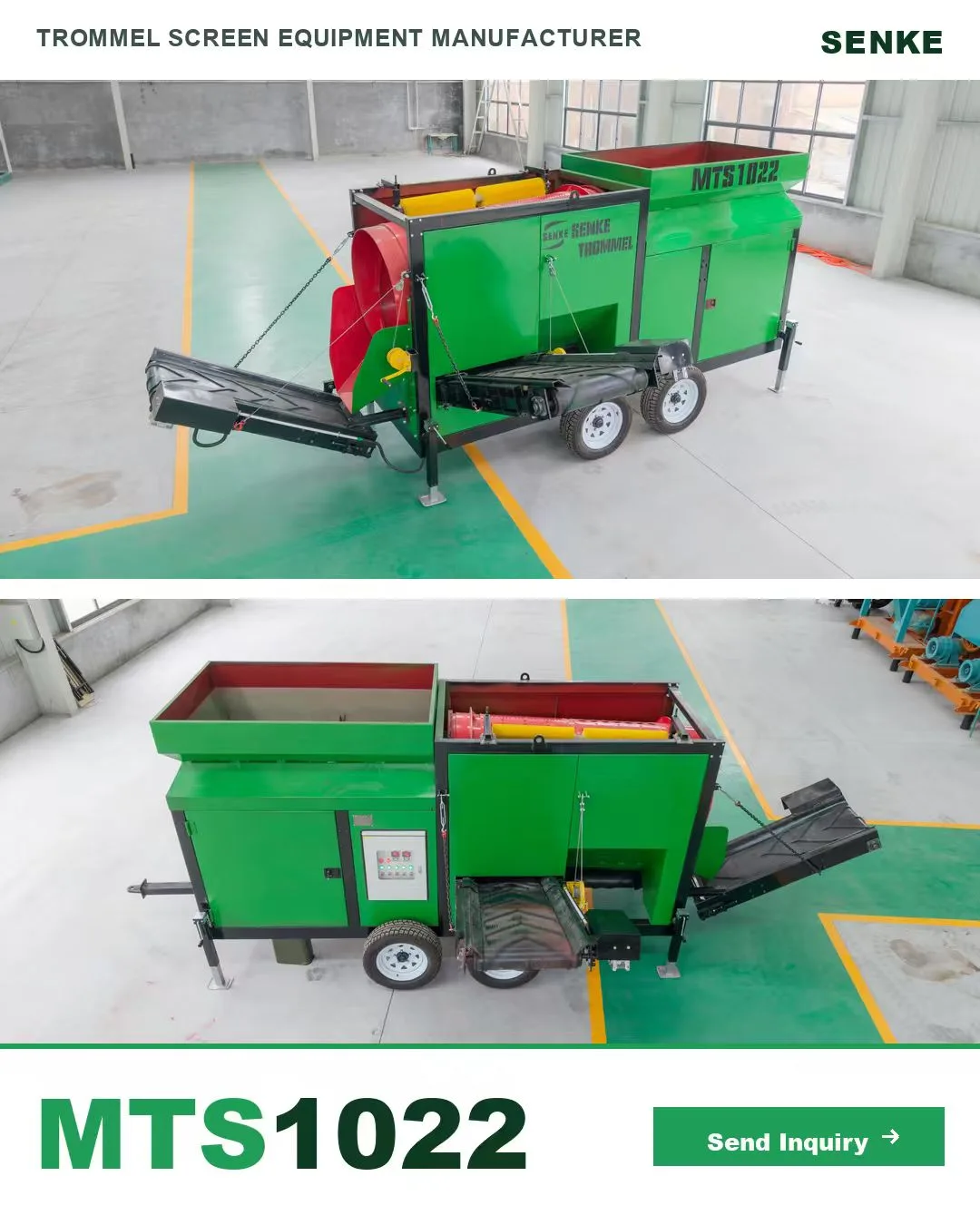
What a mobile topsoil screener does
A rotary trommel separates material by size as a perforated or mesh drum rotates. Fines pass through the screen openings while stones, roots, clods, and oversize debris travel to the end of the drum. A mobile chassis lets the same screening line move closer to excavation, stockpiles, landscaping projects, or composting areas.
- Produces more uniform loam and topsoil for resale or placement.
- Reduces manual picking and protects downstream spreading equipment.
- Supports multiple mesh sizes for changing product specifications.
- Can be deployed at source to reduce haulage and double handling.
Topsoil screener machine parameters
| Parameter | Selection guidance |
|---|
| Screening method | Continuous rotary drum size separation |
| Feed materials | Topsoil, loam, compost blends, sand, mulch, and screened aggregates |
| Screen media | Mesh or perforated plate selected for the target product grade |
| Mobility | Mobile chassis for relocation between prepared work areas |
| Feed equipment | Loader, excavator, or conveyor with steady centered loading |
| Product streams | Fine screened soil plus oversize rock and contaminant discharge |
| Controls | Drum speed and feed rate adjusted to material condition and quality target |
Actual drum dimensions, drive power, throughput, and transport configuration should be confirmed from a sample of the intended feed and the required cut size.
Choosing a screen opening for loam processing
Define the product before choosing the mesh
Start with the finished soil specification: landscaping topsoil, turf underlay, garden loam, planting mix, or general fill. Smaller openings create a finer product but may require more passes or better feed preparation. Larger openings improve flow when the feed contains damp clods or fibrous material.
Match the mesh to contamination
Rocks, roots, plastic, and demolition fragments change wear and blinding risk. Pre-sort long or hazardous objects and use a robust media selection where abrasive stone is common. Keep a spare screen panel or drum section available for high-utilization work.
Moisture handling protocols
- Check moisture before loading: inspect several points in the stockpile rather than relying on its surface appearance.
- Condition the feed: allow saturated material to drain, break large clay balls, and remove standing water where practical.
- Start below maximum feed: increase loading only after the drum is carrying material without buildup.
- Watch for blinding: falling throughput, a full drum, or material riding over the screen indicates that cleaning or a changed opening may be needed.
- Adjust the process: lower feed rate, tune drum speed, change mesh, or schedule screening during a drier window.
- Clean safely: isolate energy before clearing stuck material; never reach into a moving drum.
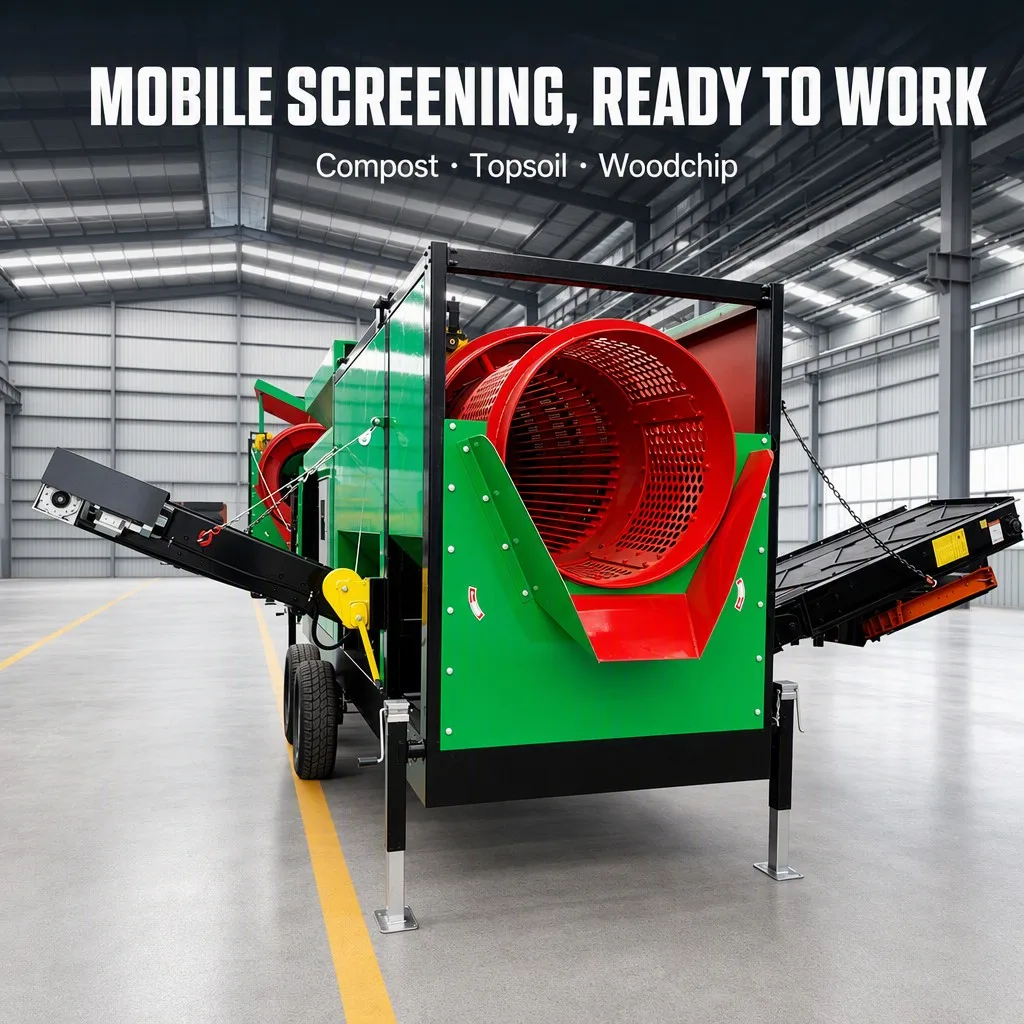
Applications for mobile rotary sifting
- Landscape contractors: produce planting soil and remove stones close to the job site.
- Soil suppliers: create consistent grades for bagging, bulk sales, and blending.
- Construction and excavation: recover usable soil from spoil and reduce disposal volume.
- Compost and organics: refine compost or loam blends before delivery.
- Golf, sports, and parks: prepare screened material for top dressing and restoration work.
- Recycling yards: separate fines from selected inert materials after pre-sorting.
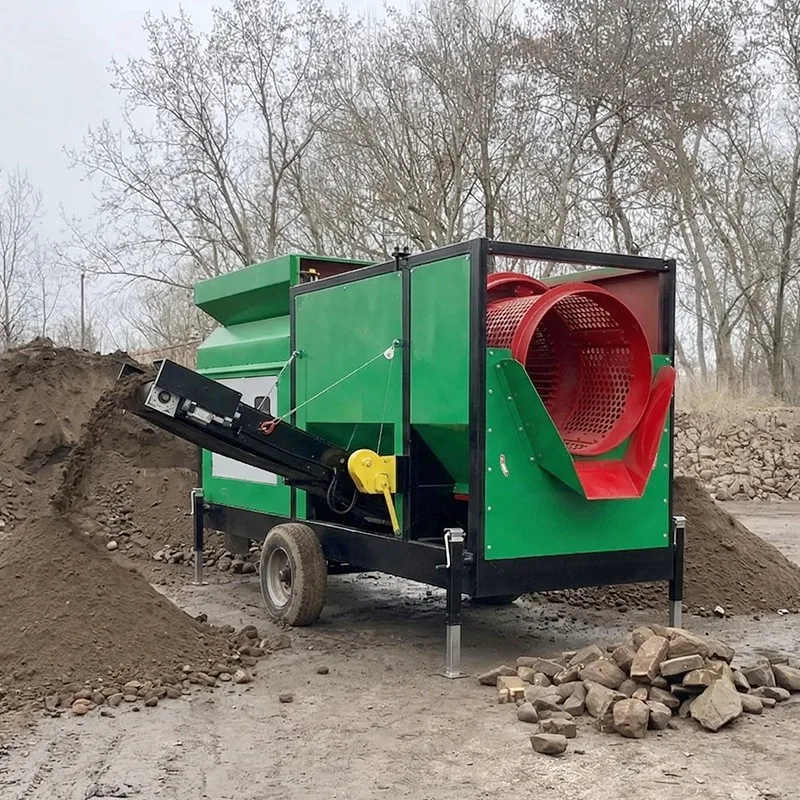
Operating workflow for consistent output
Prepare the site
Set the machine on stable, level ground with room for the loader, fine stockpile, oversize stockpile, and service access. Keep people clear of the drum, conveyors, pinch points, and discharge zones.
Commission gradually
Inspect guards, emergency stops, belts, bearings, rollers, fasteners, and screen media. Start the machine empty, confirm smooth rotation, then introduce a shallow, even feed. Use product samples to confirm the cut before increasing production.
Control quality
Record mesh opening, feed moisture, drum speed, loading method, and observed product quality. Consistent records make it easier to reproduce a successful soil grade on the next project.
Maintenance and troubleshooting
At the start of each shift, check the drum for buildup, inspect the mesh for wear, confirm belt tracking, and look for leaks or loose hardware. Clean after sticky campaigns. If fines are too coarse, verify the mesh and reduce overloading. If capacity is low, investigate moisture, blinding, excessive feed depth, and discharge congestion before changing machine settings.
Frequently asked questions
What is the difference between a topsoil screener and a static screen?
A mobile rotary screener continuously tumbles and separates feed while moving material through the drum. This provides a practical solution for variable soil and loam feeds and can be relocated between stockpiles.
Can wet topsoil be screened?
Yes, but wet or clay-rich feed needs conditioning and conservative loading. Drainage, clod breaking, the correct mesh, and frequent cleaning help limit blinding.
How do I select capacity?
Base the selection on required hourly output, feed density, moisture range, loader bucket size, target cut, and the number of hours available. A realistic sample test is more useful than relying on a nominal capacity alone.
Can one machine make multiple soil grades?
With suitable interchangeable screen media and correct setup, the machine can be configured for different grades. Changeovers should be planned around safe isolation, cleaning, and product verification.
Get a topsoil screening recommendation
Send SENKE your feed description, moisture range, target loam grade, desired hourly output, and site photos. We can help match the rotary screener, screen media, feed arrangement, and discharge layout to your project.
Ready to process better soil? Contact SENKE for a mobile topsoil screener recommendation and quotation.