In industries such as mining, recycling, composting, and waste processing, screening wet and sticky materials can be challenging. Traditional vibrating screens often suffer from clogging, reduced efficiency, and unstable performance when handling high-moisture materials. A flip flow screen provides an…
In industries such as mining, recycling, composting, and waste processing, screening wet and sticky materials can be challenging. Traditional vibrating screens often suffer from clogging, reduced efficiency, and unstable performance when handling high-moisture materials.
A flip flow screen provides an advanced solution by using flexible polyurethane screen mats and high-frequency elastic movement to separate difficult materials effectively. It is specially designed for processing sticky, damp, and fine materials while maintaining high screening efficiency.
For professional screening equipment solutions, visit:
https://www.screentrommel.com/
What Is a Flip Flow Screen?
A flip flow screen is a high-performance screening machine that uses alternating stretching and relaxing movements of flexible screen panels. This unique action creates a powerful self-cleaning effect, preventing material blockage and improving separation accuracy.
Unlike conventional vibrating screens, flip flow screens are particularly suitable for:
- Wet materials
- Sticky materials
- Fine particles
- Industrial waste
- Recycling materials
- Compost and biomass
The special elastic screening surface allows continuous operation even under difficult conditions.
How Does a Flip Flow Screen Work?
The working principle of a flip flow screen is based on dynamic tension movement.
During operation:
- The screen frame creates a vibration movement.
- Flexible polyurethane panels stretch and relax rapidly.
- Material particles are thrown and separated through the screen openings.
- Fine materials pass through while oversized materials move toward discharge.
This high-frequency elastic movement prevents clogging and improves screening efficiency.
Key Advantages of Flip Flow Screen
1. Excellent Anti-Clogging Performance
One of the biggest advantages of a flip flow screen is its self-cleaning ability. The flexible screen mats continuously change shape during operation, preventing material buildup.
This makes it ideal for:
- Wet clay
- Coal slime
- Sticky soil
- Compost materials
- Industrial residues
2. High Screening Accuracy
The elastic screen surface provides better separation of fine particles compared with traditional screening equipment.
Benefits include:
- Higher screening efficiency
- Improved product quality
- Reduced material loss
- More consistent output
3. Handles Difficult Materials
Many materials are difficult to process with standard vibrating screens because of moisture and stickiness.
A flip flow screen performs effectively with:
- Wet sand
- Construction waste
- Municipal waste
- Mineral materials
- Organic waste
4. Reduced Maintenance Requirements
Because the screen surface has strong self-cleaning capability, operators experience:
- Less downtime
- Fewer screen blockages
- Lower maintenance costs
- Longer screen panel life
Applications of Flip Flow Screen
Mining Industry
Flip flow screens are widely used for separating:
- Coal
- Minerals
- Ore
- Fine aggregates
They maintain stable performance even when processing materials with high moisture content.
Recycling Industry
In recycling operations, flip flow screens help separate valuable materials from mixed waste, including:
- Construction waste
- Industrial waste
- Plastic recycling materials
- Organic waste
Compost and Biomass Processing
Compost and biomass materials often contain moisture and sticky components. A flip flow screen improves material classification and produces more uniform finished products.
Flip Flow Screen vs Traditional Vibrating Screen
| Feature | Flip Flow Screen | Traditional Vibrating Screen |
|---|
| Wet Material Processing | Excellent | Limited |
| Anti-Clogging Ability | High | Medium |
| Fine Screening | Excellent | Good |
| Maintenance | Low | Medium |
| Sticky Material Handling | Superior | Difficult |
How to Choose the Right Flip Flow Screen
When selecting a flip flow screen, consider:
Material Characteristics
Analyze moisture level, particle size, and material stickiness.
Required Capacity
Choose equipment according to your production requirements.
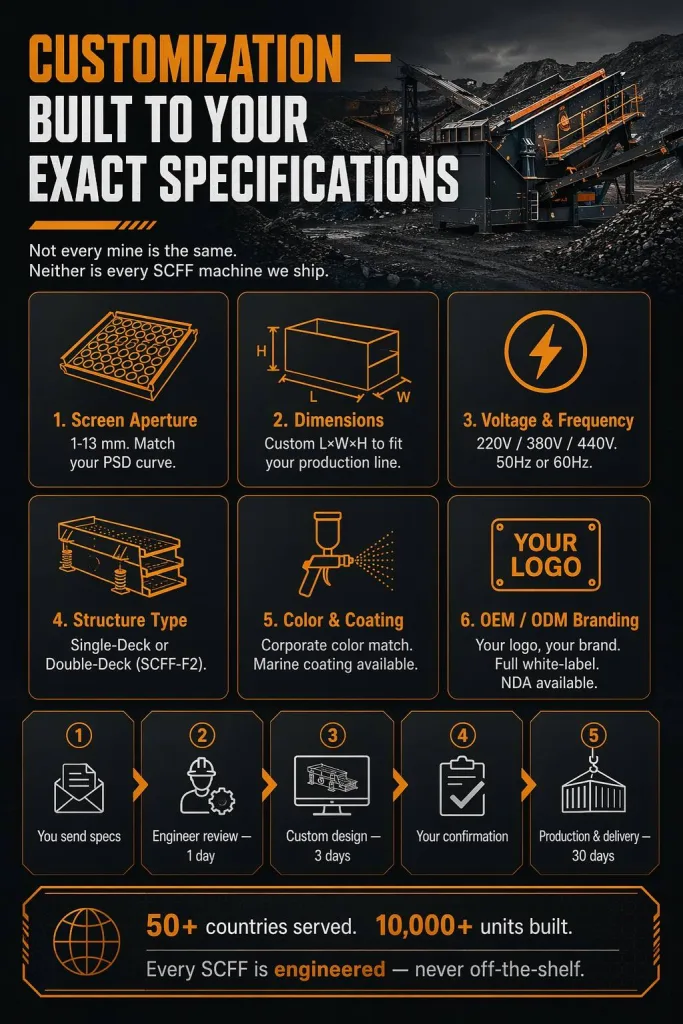
Screen Opening Size
Different applications require different mesh sizes.
Operating Environment
Consider whether the machine will be used indoors, outdoors, or in harsh conditions.
Maintenance Tips
To ensure long-term performance:
- Check polyurethane screen panels regularly
- Inspect vibration components
- Clean material buildup around equipment
- Monitor motor performance
- Replace damaged screen panels promptly
Proper maintenance helps maintain stable screening efficiency.
Conclusion
A flip flow screen is an advanced screening solution designed for challenging materials that traditional screens cannot efficiently handle. With excellent anti-clogging performance, high screening accuracy, and reliable operation, it has become an important piece of equipment in mining, recycling, composting, and industrial processing.
For businesses looking to improve screening efficiency and reduce operating costs, investing in a high-quality flip flow screen is a practical and effective choice.
For more screening equipment solutions, visit:
https://www.screentrommel.com/
https://cnsenke.m.en.alibaba.com/