Choosing between Carbon-in-Pulp (CIP) and Carbon-in-Leach (CIL) remains one of the most consequential decisions in gold processing plant design. Both technologies use activated carbon to recover gold from cyanide leach slurries, yet their operational philosophies differ fundamentally . This comprehensive CIP CIL…
Choosing between Carbon-in-Pulp (CIP) and Carbon-in-Leach (CIL) remains one of the most consequential decisions in gold processing plant design. Both technologies use activated carbon to recover gold from cyanide leach slurries, yet their operational philosophies differ fundamentally . This comprehensive CIP CIL gold processing comparison examines the technical distinctions, economic implications, and application guidelines to help you make an informed investment decision.
Understanding the Core Difference
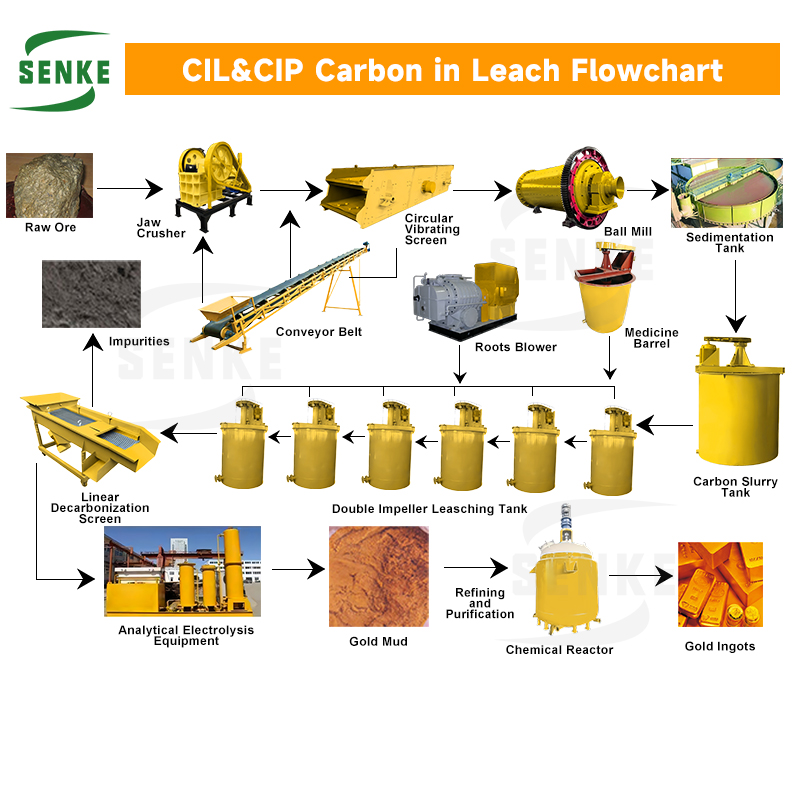
The fundamental distinction between CIP and CIL lies in the timing of carbon introduction relative to leaching .
In CIP (Carbon-in-Pulp) circuits: Leaching occurs first in dedicated tanks without carbon. After sufficient residence time for gold dissolution, the slurry moves to separate adsorption tanks where activated carbon recovers the dissolved gold. This sequential approach allows independent optimization of leaching and adsorption conditions .
In CIL (Carbon-in-Leach) circuits: Leaching and adsorption occur simultaneously in the same tanks. Carbon is present from the early stages of cyanidation, continuously adsorbing gold as it dissolves . According to industry data, this integrated approach can reduce capital investment by approximately 48% compared to traditional CIP configurations for medium-scale operations .
Process Flow Comparison
| Stage | CIP Process | CIL Process |
|---|
| Leaching | 6–24 hours in dedicated tanks without carbon | 20–24 hours in tanks containing carbon |
| Adsorption | 4–8 stages in separate tanks | Integrated with leaching, typically 6–8 tanks total |
| Carbon Movement | Counter-current between adsorption tanks only | Counter-current across entire tank train |
| Screening | Between leach and adsorption; between adsorption stages | Between all tanks to retain carbon |
When to Choose CIL: The Preg-Robbing Factor
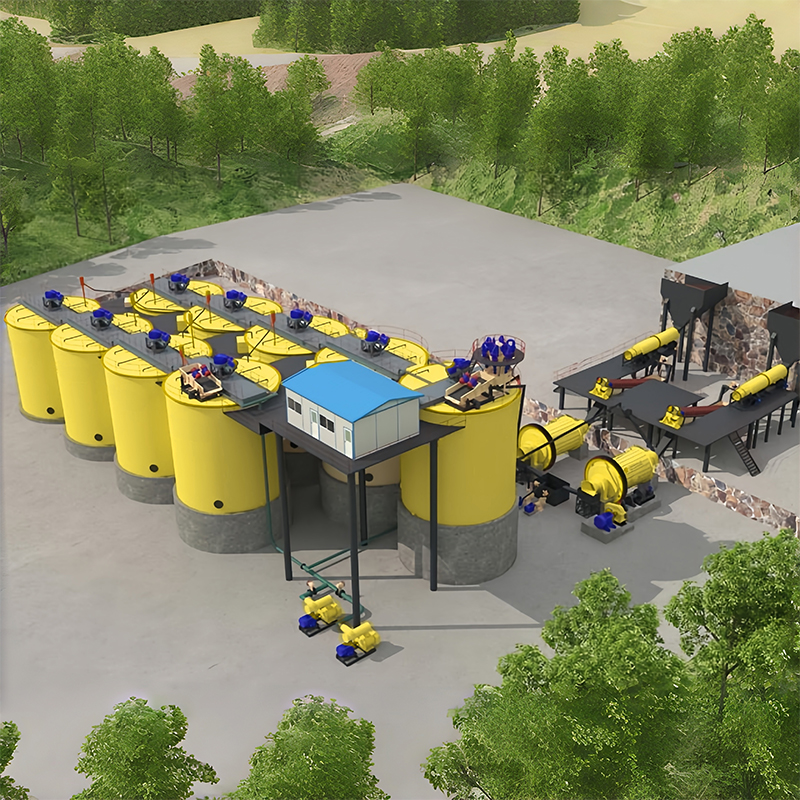
The CIP CIL gold processing comparison becomes particularly critical when processing ores containing preg-robbing components—materials that naturally adsorb dissolved gold. These include:
- Activated carbonaceous matter naturally present in the ore
- Certain clay minerals that can preg-rob gold cyanide complexes
- Organic carbon compounds from weathered ore zones
In conventional CIP circuits treating preg-robbing ores, dissolved gold can be adsorbed by these natural components before reaching activated carbon, resulting in significant losses to tailings . CIL addresses this by introducing activated carbon early, competing with preg-robbing components for gold adsorption as dissolution occurs .
As Metso’s technical literature explains, modern CIL plants using advanced reactor designs like OKTOP® agitators can minimize carbon attrition while maximizing gold recovery, even in challenging ore types .
Economic Considerations
Capital Investment:
- CIL: Lower initial investment due to combined leach/adsorption tanks. One analysis shows CIL reducing capital costs by 48.6% compared to traditional CCD circuits, and approximately 30% compared to conventional CIP .
- CIP: Higher capital cost due to separate tankage and additional inter-stage screening .
Operating Costs:
- CIL: Typically higher carbon consumption because carbon remains in contact with abrasive slurry throughout the leach cycle. Carbon attrition rates directly impact consumables budget .
- CIP: Lower carbon consumption as carbon contacts slurry only during adsorption stages. However, additional pumping and screening between stages increases power consumption .
Gold Lock-Up:
- CIL: Less gold inventory in circuit because adsorption occurs continuously. For a 100,000 t/month operation processing 7.5 g/t ore, CIL can reduce gold lock-up value by over $200,000 compared to conventional circuits .
- CIP: Higher gold inventory during processing, representing working capital tied up in circuit.
Operational Complexity
CIL Advantages:
- Fewer equipment items (combined leach/adsorption tanks)
- Simplified piping and pumping arrangements
- Reduced inter-stage screening requirements
- Continuous operation mode well-suited to fluctuating feed grades
CIP Advantages:
- Independent optimization of leaching and adsorption conditions
- Ability to adjust carbon concentrations without affecting leaching chemistry
- Greater flexibility for ores requiring specialized leach conditions
- Better suited to very high-grade ores where rapid adsorption is critical
Selection Guidelines
Based on extensive industry experience documented in the AMIRA P420 project and other technical sources, the following selection criteria apply :
Choose CIL when:
- Ore contains preg-robbing components (carbonaceous matter, certain clays)
- Capital budget is constrained
- Processing low-to-medium grade ores (2–8 g/t typical)
- Gold dissolution kinetics are relatively fast
- Site has limited operator experience (simpler operation)
Choose CIP when:
- Ore has no preg-robbing characteristics
- Processing high-grade ores (>8–10 g/t)
- Maximum gold recovery is the overriding priority
- Independent optimization of leach and adsorption is beneficial
- Carbon consumption costs are a primary concern
Case Study: CIL for Low-Grade Ore Processing
A practical illustration of the CIP CIL gold processing comparison comes from operations treating 7.5 g/t ore at 100,000 tons monthly. The CIL configuration demonstrated :
- 48.6% lower capital investment compared to conventional CCD circuits
- $201,700 reduction in gold inventory lock-up
- 67.5% overall financial benefit after accounting for slightly higher carbon consumption
- Recovery rates exceeding 90% even with lower-grade feed
This economic advantage explains why CIL has become the default choice for many modern operations, particularly in the 1,000–3,000 t/d range .
Carbon Management in Both Circuits
Regardless of circuit selection, carbon management remains critical. Key considerations from recent advances in CIP/CIL technology include :
- Carbon quality: Coconut-shell or peat-based extruded carbons with high activity and abrasion resistance
- Particle size distribution: Affects screening efficiency and adsorption kinetics
- Transfer systems: Recessed impeller pumps reduce carbon attrition during inter-stage transfer
- Elution and regeneration: Typically Zadra or AARL processes with integrated electrowinning
Metso’s modular elution and goldroom plants demonstrate how standardized, pre-engineered solutions can reduce CAPEX while ensuring complete performance guarantees for the carbon stripping circuit .
Conclusion
The CIP CIL gold processing comparison ultimately resolves to ore characteristics and project economics. CIL has gained widespread acceptance for its capital efficiency and effectiveness against preg-robbing ores, while CIP remains valuable for high-grade applications and situations requiring process flexibility. By carefully evaluating your ore through bench-scale and pilot testing, you can select the configuration that maximizes project value over the life of mine.
📞 Ready to optimize your gold recovery circuit?
[Contact Our Process Engineers] | [Request a Feasibility Study] | Gold Prices