High-quality topsoil is essential for landscaping, gardening, turf preparation, agriculture, and land improvement. However, raw topsoil often contains stones, roots, grass, wood pieces, and other oversized materials that can affect its quality and usability. The SL-VS70 vibrating screen is designed…
High-quality topsoil is essential for landscaping, gardening, turf preparation, agriculture, and land improvement. However, raw topsoil often contains stones, roots, grass, wood pieces, and other oversized materials that can affect its quality and usability.
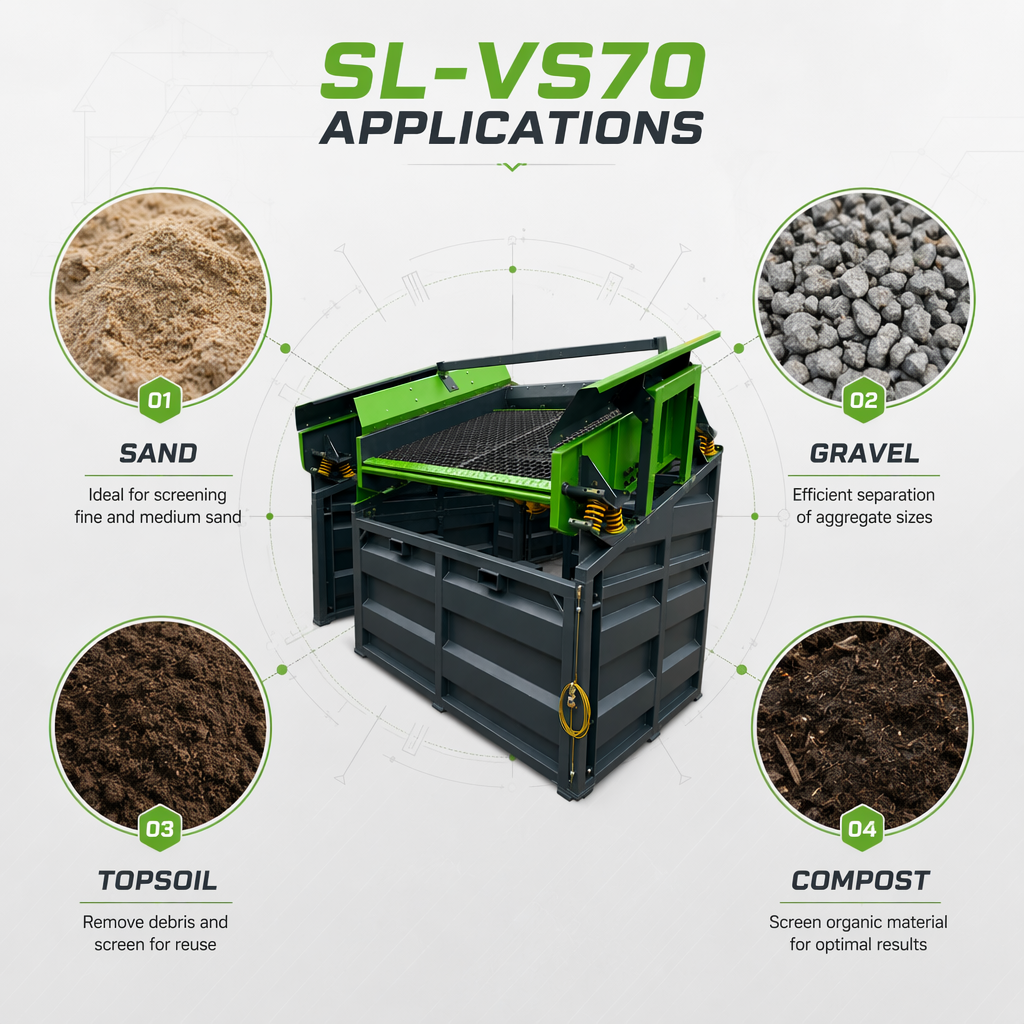
The SL-VS70 vibrating screen is designed to provide an efficient solution for topsoil screening. By separating fine soil from unwanted oversized materials, the machine helps produce cleaner and more uniform topsoil while improving processing efficiency.
For more professional screening equipment solutions, visit the SENKE product catalog:
SENKE Alibaba Store
What Is the SL-VS70 Vibrating Screen?
The SL-VS70 vibrating screen is a vibrating screening machine primarily designed for separating soil and other bulk materials according to particle size.
For topsoil processing, the vibrating motion continuously moves the material across the screen surface. Fine soil particles pass through the screen openings, while larger stones, roots, clumps, and debris are carried toward the oversize discharge.
This simple and efficient screening process makes the SL-VS70 a practical choice for businesses that need to process and reuse topsoil.
Why Use a Vibrating Screen for Topsoil?
Raw topsoil can vary considerably in particle size and may contain unwanted materials. Manual screening is slow and physically demanding, particularly when processing large quantities.
A topsoil vibrating screen can help improve the process by providing:
- Faster soil separation
- More consistent particle size
- Reduced manual labor
- Continuous screening
- Better utilization of excavated soil
- Improved finished topsoil quality
Instead of manually removing rocks and debris, operators can use mechanical screening to process larger quantities more efficiently.
How the SL-VS70 Screens Topsoil
The working process is straightforward.
First, raw topsoil is fed onto the vibrating screen. The vibration causes the soil to move and spread across the screening surface. Fine particles pass through the selected screen openings, while oversized material remains on top and moves toward the discharge area.
The result is two material streams:
Fine screened topsoil:
Suitable for landscaping, lawns, gardens, planting beds, and other applications where relatively uniform soil is required.
Oversized material:
Stones, roots, sticks, and other debris can be collected separately for disposal or further processing.
This separation process allows users to recover usable soil while reducing unnecessary waste.
Main Applications of the SL-VS70
Landscaping and Garden Soil
One of the primary applications of the SL-VS70 vibrating screen is preparing topsoil for landscaping projects.
Screened soil can be used for:
- Lawn preparation
- Turf installation
- Flower beds
- Garden projects
- Landscape restoration
- General soil improvement
Removing larger stones and debris creates a more consistent material that is easier to spread and work with.
Screening Excavated Topsoil
Construction and landscaping projects often generate large quantities of excavated soil. Instead of transporting all excavated material away, screening equipment can help recover the usable fraction.
The SL-VS70 can separate fine soil from larger unwanted materials, helping businesses make better use of material already available at the job site.
Soil Preparation for Agriculture
Farm and agricultural applications may also benefit from screening when soil contains excessive stones or oversized organic materials.
Depending on the soil characteristics and required particle size, appropriate screening can produce a more uniform material for specific applications.
Benefits of the SL-VS70 Topsoil Screening Machine
Efficient Material Separation
The vibrating screening action allows continuous separation of fine soil and oversized materials, helping improve processing efficiency compared with manual sifting.
Consistent Screening Results
Selecting a suitable screen opening allows operators to control the approximate size of material passing through the screen.
Reduced Manual Labor
Mechanical screening reduces the need for workers to manually remove stones, roots, and other debris from large quantities of soil.
Better Soil Utilization
Instead of treating excavated soil as waste, screening provides an opportunity to recover the usable fine fraction for landscaping or other projects.
Simple Screening Process
The straightforward operating principle makes vibrating screening equipment suitable for a variety of soil-processing environments.
Choosing the Right Screen Mesh for Topsoil
Screen mesh selection is an important factor when processing topsoil.
A smaller screen opening generally produces finer screened material, while a larger opening allows more oversized particles to pass through.
The ideal mesh size depends on:
- Desired finished soil size
- Amount of stones in the raw soil
- Soil moisture
- Organic content
- Required processing capacity
- Final application
For example, landscaping projects requiring relatively fine soil may use a finer screen, while general fill applications may accept larger particles.
It is therefore important to select the screen configuration according to the actual characteristics of the topsoil rather than choosing a mesh size based only on the machine model.
Factors That Affect Topsoil Screening Efficiency
Several factors can influence the performance of a topsoil screener.
Soil Moisture
Very wet or sticky soil may be more difficult to screen because particles can stick together or adhere to the screen surface.
Material Feed Rate
Overloading the screen can reduce separation efficiency. Maintaining an appropriate and consistent feed rate helps material spread across the screening surface.
Particle Size Distribution
Topsoil containing a large amount of oversized material may require appropriate feed control to maintain stable operation.
Screen Condition
A clean and properly maintained screen surface is important for consistent screening performance.
SL-VS70 Vibrating Screen Maintenance Tips
Regular maintenance can help maintain screening efficiency and extend equipment service life.
Operators should:
- Check the screen surface regularly
- Remove accumulated soil and debris
- Inspect fasteners and structural components
- Check bearings and vibration components
- Inspect the motor and drive system
- Replace damaged or worn screen sections when necessary
Cleaning the screen after operation is particularly useful when processing moist or clay-rich topsoil.
SL-VS70 vs. Manual Topsoil Screening
For small amounts of soil, manual screening may be sufficient. However, as material volume increases, mechanical screening becomes considerably more practical.
| Feature | SL-VS70 Vibrating Screen | Manual Screening |
|---|
| Processing Efficiency | High | Low |
| Labor Requirement | Lower | Higher |
| Continuous Operation | Yes | No |
| Large Volume Processing | Suitable | Time-consuming |
| Screening Consistency | More consistent | Depends on operator |
| Physical Workload | Reduced | High |
For contractors and landscaping businesses processing significant amounts of topsoil, a mechanical vibrating soil screener can provide substantial workflow advantages.
A Practical Solution for Topsoil Recycling
Topsoil screening is not only about producing better soil. It can also help improve material utilization.
When excavated soil contains a mixture of fine earth, stones, roots, and other debris, screening can separate the usable soil fraction from oversized materials. This can reduce the amount of material requiring transportation and disposal.
For landscaping contractors and construction companies, recovering usable topsoil can therefore contribute to more efficient material management.
Conclusion
The SL-VS70 vibrating screen provides an efficient solution for topsoil screening, helping separate fine soil from stones, roots, clumps, and other oversized materials. Its mechanical screening process can reduce manual labor, improve material consistency, and make better use of excavated topsoil.
For landscaping, gardening, agriculture, and construction applications, choosing the appropriate screen configuration is essential for achieving the desired soil quality and screening efficiency.
If you are looking for reliable topsoil screening equipment, you can explore more screening machines and solutions from ZSSENKE here:
View SENKE Screening Equipment